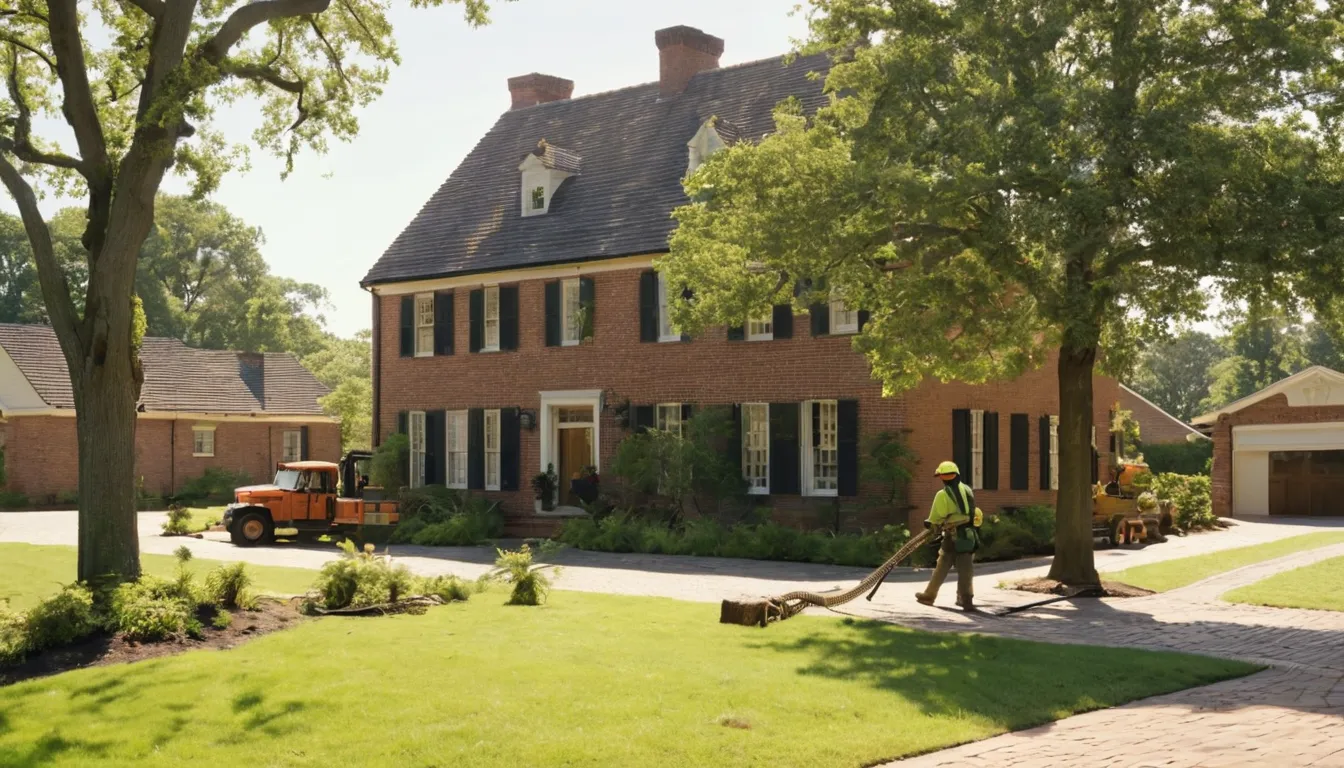
Is a tree leaning, dying or crowding your roof? Taking it down is a big decision, and doing it well matters. Pointedstudio Tree Service is a referral service. We connect homeowners in Charlotte with independent local providers who handle the climbing, cutting and hauling.
A careful removal protects your siding, roof, fence and lawn. It also protects what the home is worth when you sell. Hot humid summers, summer thunderstorms and the odd ice storm all stress trees in the Charlotte area, so it pays to act before a weak tree fails. Request a callback to check provider availability, or request an estimate and compare written quotes. The provider does the work. Our job is to help you ask the right questions first.
Is it time to take this tree down?
Maybe you keep glancing at one tree every time the wind picks up. That feeling is worth listening to. A tree that worries you is a tree worth having a professional look at.
Removal is not always the answer. Sometimes pruning solves it. A provider can tell you which one fits, and you can ask for the reasoning in plain words.
Why do homeowners remove trees?
Most people do it for a few simple reasons:
- The tree is dead, dying or hollow.
- Roots are pushing into a slab, crawl space, pipes or driveway.
- Limbs hang over the roof and drop debris into gutters.
- A past storm left it leaning or split.
- The tree blocks a planned addition, pool or fence.
How can I tell if the tree is a risk?
Look for dead branches at the top, mushrooms at the base, deep cracks, peeling bark and a new lean. In our humid summers, rot can spread quietly inside a trunk. A tree can look green and still be weak.
If you see several of these signs, ask a provider to inspect it before the next thunderstorm season.
What if the tree is already down or about to fall?
If a tree has fallen on the house, a power line or a car, stay clear and keep everyone away. Emergency tree removal and storm tree clearance are handled by providers who can often respond quickly, though availability varies.
Request a callback to check provider availability.
How does tree removal actually work?
It is simpler than it looks. The provider walks the property and checks the tree, the ground and what sits nearby. Then they plan where each piece will go.
For open yards, a tree falling service may fell the tree in one direction. Near brick, vinyl siding or a roof, crews often cut it in sections and lower each piece on ropes. That slow method protects the house.
The last steps are cutting the wood to size, chipping the branches and hauling debris away. Ask whether the stump is included or priced separately.
What changes the price?
Height, trunk width, access and hazards drive the cost. A tall oak behind a fence costs more than a small tree in an open yard. Power lines, pools and tight spaces add work.
Add-ons matter too, such as hauling the wood or removing the stump. The cost table below shows typical U.S. ranges. Your quote may differ, so always get it in writing.
Do I need a permit?
Sometimes, yes. Some cities and neighborhoods protect large or older trees. Others have rules for trees near the street or on shared property lines.
Check with your local city office or homeowners association before work begins. Many providers know the local rules and can point you in the right direction.
How do I choose a provider?
Ask before you cut. Good providers are happy to answer.
- Can I see proof of liability insurance and workers' compensation?
- Is the quote written, with the full scope listed?
- Who handles cleanup and hauling?
- What is the plan to protect my roof, lawn and fence?
Be careful with anyone who asks for full payment upfront or pushes you to decide on the spot.
How do I get ready for removal day?
A little prep helps the job go smoothly.
- Move cars out of the driveway and off the street.
- Clear patio furniture, toys and planters from the work area.
- Tell neighbors, especially if limbs cross the fence line.
- Secure pets indoors.
- Know where the tree should land, and mark anything fragile.
What happens after the tree comes down?
Walk the yard with the provider. Check the roof, gutters and siding for scrapes. Look at the lawn where equipment rolled. If you spot a problem, mention it before the crew leaves.
If the tree damaged your home, some policies may cover sudden damage, so check your policy. Providers can often help document damage for a claim.
What about the stump and the empty space?
A stump left behind can attract pests and trip people. Ask about stump grinding when you get your quote. Then plan what fills the space, such as a smaller, healthier tree, a garden bed or new sod.
How do I keep the next storm from finding weak spots?
Fix it, then prevent it. After removal, take a look at the rest of your trees.
- Have a provider inspect mature trees once a year.
- Prune dead limbs before storm season.
- Keep mulch off the trunk base.
- Water young trees during dry stretches.
- Plant new trees well away from the house and slab.
Small habits protect the property and its value for years.
Ready to take the next step?
You do not have to figure this out alone. Tell us about your tree, and an independent local provider can walk you through the options. Request a callback to talk it through, or send a request and compare written quotes.
What's Included
Careful Tree Felling
Providers plan the drop zone or section the tree down so roofs, fences and landscaping stay protected.
Debris Haul-Away
Branches, logs and brush can be chipped and carted off, leaving the yard ready to use again.
Hazard Assessment
A provider checks lean, rot, power lines and nearby structures before deciding how to remove it.
Written Quotes
Ask for a clear quote that lists scope, cleanup and stump work so surprises stay out.
Typical Tree Removal Costs
Prices depend on tree size, access, hazards and cleanup. These are typical U.S. ranges only. Local rates differ, so ask each provider for a written quote that lists exactly what is included.
| Job type | Typical range | Notes |
|---|---|---|
| Small tree, under 30 ft | $150 – $500 | Open access, easy cleanup |
| Medium tree, 30–60 ft | $400 – $1,200 | Common for backyard hardwoods |
| Large tree, over 60 ft | $1,000 – $2,500 | Size and trunk width raise the cost |
| Tight access or near structures | $1,500 – $3,500 | May need rigging or a crane |
| Storm-damaged or fallen tree | $500 – $3,000 | Depends on damage and hazards |
| Extra hauling and wood chipping | $75 – $300 | Sometimes included, so ask |
How It Works
Tell Us Your Situation
Request a callback or send a request describing the tree, its location and any concerns you have.
Get Matched With Providers
A local provider in our network reaches out to talk through your project and availability.
Review the Quote
Look over the written quote, including scope, cleanup, stump options and any permit questions.
Schedule and Prepare
Pick a date, clear the work area and let the provider handle the cutting and hauling.
Why Call Pointedstudio Tree Service
Protect Property
Careful cutting keeps falling limbs away from your roof, siding, fence, utilities and landscaping.
Protect Value
A clean, well-handled job keeps your yard looking good for future buyers.
Clear Answers
Compare providers and ask questions before you commit to any work on your property.
Plan Ahead
Get maintenance advice so the next storm finds fewer weak trees.
Other Services
Need tree removal in Charlotte?
- Independent local providers in our network
- Tree removal and stump grinding
- Emergency tree removal after storms
- Request an estimate, no obligation
Tree Removal FAQ
How much does it cost to remove a tree?
Typical U.S. prices run from about $150 for a small tree to $2,500 or more for a large one. Access, hazards, cleanup and stump work all change the number, so get a written quote.
Do I need a permit to cut down a tree?
It depends on where you live. Some cities and homeowners associations protect larger trees or those near the street. Check with your local office or association before work starts.
Will homeowners insurance pay for tree removal?
Some policies may cover sudden damage, like a tree falling on a house during a storm. Routine removal usually is not covered. Check your policy, and ask providers to help document damage for a claim.
Get in touch
Have a leaning tree, a storm-damaged limb or a stubborn stump? Reach out and a local provider can follow up to talk through your options.
No obligation